
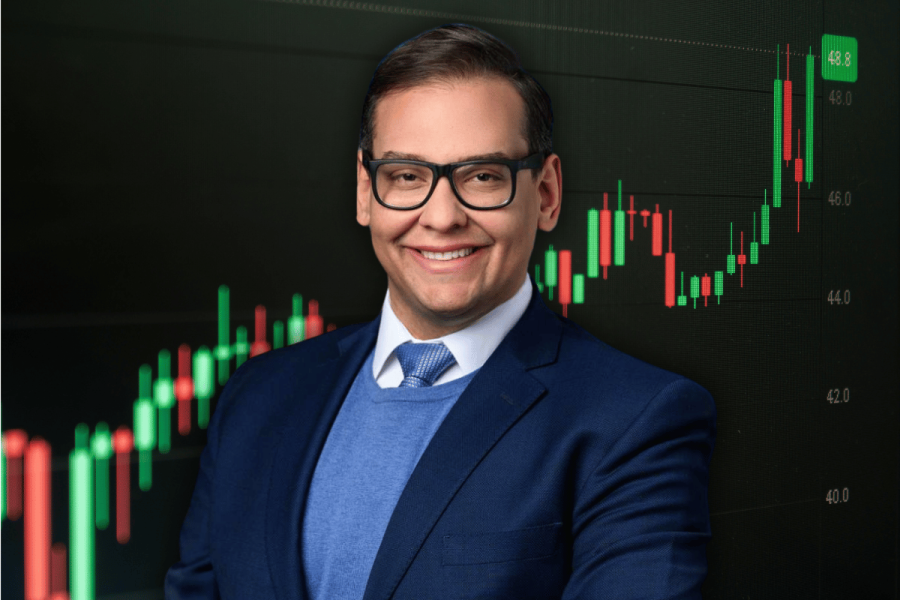
George Santos Rejects Prediction Market Trading Allegations as Federal Scrutiny Grows
Former U.S. Representative George Santos is pushing back against allegations that he improperly profited from prediction market trading, as federal authorities reportedly examine activity tied to his account on Kalshi, one of the country's leading prediction market platforms. The development marks the latest controversy surrounding the already scandal-plagued former congressman and arrives at a moment when political prediction markets are facing intensifying regulatory and legal scrutiny across the board.
What Are the Allegations Against George Santos?
According to reports that surfaced in early June 2026, the Department of Justice may be investigating trading activity linked to George Santos on Kalshi, a federally regulated prediction market exchange. The concern centers on whether Santos — given his former position in Congress and his access to political information — may have used non-public knowledge to place profitable bets on political outcomes.
In a post published on X on June 3, Santos stated that he only became aware of the potential investigation through media reports, not through any direct communication from federal officials. He said his legal team had already reached out to federal authorities to seek clarification and confirmed that he would cooperate fully with any requests for information. Santos denied any wrongdoing and characterized the reporting as premature and speculative.
The statement did little to quiet the storm of media inquiries that flooded his team overnight, which Santos also addressed publicly, urging reporters to stop calling before his attorneys had a chance to establish formal contact with investigators.
Understanding Kalshi and Political Prediction Markets
To understand the weight of these allegations, it helps to understand what prediction markets actually are and why they have attracted so much regulatory attention in recent years. Prediction markets are platforms where users can place monetary bets on the likelihood of real-world events — including political elections, legislative outcomes, and government appointments.
Kalshi is one of the most prominent regulated prediction market platforms in the United States. It operates under oversight from the Commodity Futures Trading Commission (CFTC), which has allowed it to offer event contracts on a range of political and financial topics. Unlike offshore betting platforms, Kalshi's legal standing in the U.S. gives it a degree of legitimacy, but it also subjects its users and the company itself to a stricter regulatory framework.
The rise of political prediction markets has been rapid and significant. During the 2024 election cycle, platforms like Kalshi and Polymarket processed hundreds of millions of dollars in political bets, drawing both mainstream attention and regulatory concern. Critics have long argued that allowing individuals with inside political knowledge — such as lawmakers, lobbyists, or their associates — to trade on political outcomes creates an obvious conflict of interest and a potential avenue for market manipulation.
Why Insider Trading on Prediction Markets Is a Growing Concern
The Santos allegations tap into a broader and deeply uncomfortable question: can political insiders use privileged information to profit on prediction markets the same way a Wall Street trader might exploit material non-public information about a company's earnings?
The answer, legally speaking, is murky — and that ambiguity is precisely what regulators are struggling to address. Traditional insider trading laws apply primarily to securities markets. Prediction market contracts, by contrast, are classified differently, and the legal framework governing what constitutes improper trading on these platforms is still evolving.
- Former lawmakers and their staffers often retain access to political networks and sensitive information long after leaving office.
- Prediction market platforms currently lack robust mechanisms to screen for users who may hold informational advantages derived from political connections.
- The CFTC has jurisdiction over Kalshi but has not yet issued comprehensive rules specifically targeting political insider trading on event contracts.
- Legal experts have warned that the current regulatory gap could invite exactly the kind of behavior Santos is now accused of.
The concern is not hypothetical. As prediction markets grow in size and influence, the incentive for those with political access to exploit that access for financial gain only increases. The Santos case, whether or not it results in formal charges, is likely to accelerate the conversation around tightening those guardrails.
Santos's Track Record and Why This Story Resonates
George Santos is no stranger to controversy. Expelled from the House of Representatives in December 2023 after a historic vote, Santos had faced a cascade of revelations about fabricated biographical details, including false claims about his education, employment history, and family background. He subsequently pleaded guilty to federal fraud charges related to campaign finance violations and wire fraud.
That history makes any new federal scrutiny involving Santos immediately newsworthy, and it also means the public and press are likely to approach his denials with significant skepticism. His insistence that he learned of the DOJ's interest through media reports rather than official channels is consistent with how these types of preliminary investigations often develop, but it does little to resolve the underlying questions about his trading activity.
What Happens Next — and What It Means for Prediction Markets
Whether the DOJ moves forward with a formal investigation or eventually closes the inquiry without charges remains to be seen. Santos has said he will cooperate, and his attorneys have made contact with federal officials. But the reputational and legal stakes are already significant for everyone involved.
For the broader prediction market industry, the Santos situation arrives at a pivotal moment. Platforms like Kalshi have worked hard to establish legitimacy and legal standing in the United States, and high-profile allegations of insider activity could fuel calls for stricter oversight, user verification requirements, or even legislative action restricting who is permitted to trade on political outcomes.
Regulators, lawmakers, and platform operators alike are watching closely. As political betting becomes a more mainstream financial activity, the need for clear, enforceable rules around who can trade, what information they can act on, and how violations are identified and prosecuted is becoming impossible to ignore. The George Santos prediction market story may be one of the most visible flashpoints yet in that ongoing debate.