
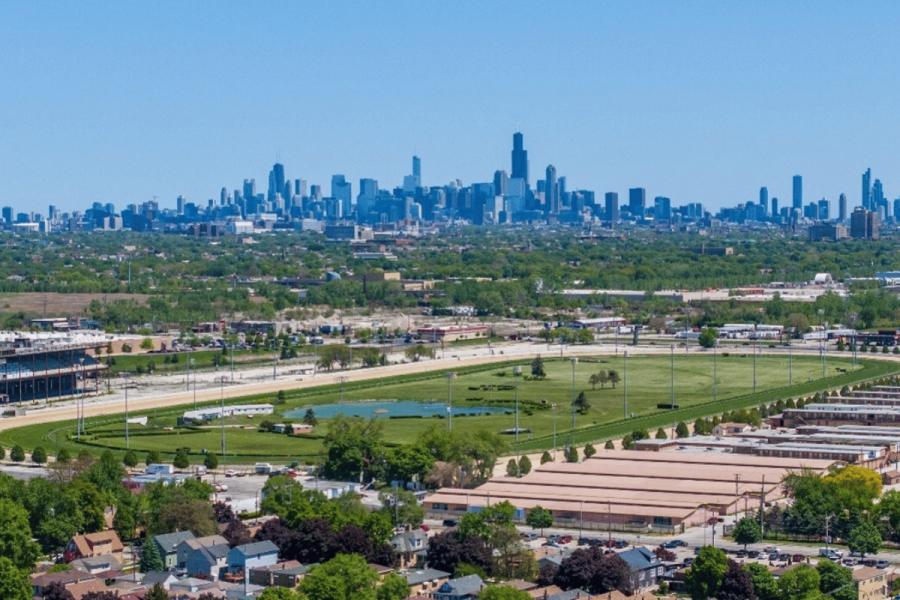
Hawthorne Race Course Faces June 26 Sale Deadline Amid Chapter 11 Bankruptcy
One of Illinois' most storied horse racing venues is at a critical crossroads. Hawthorne Race Course, a 108-acre property situated just west of Chicago in Stickney, Illinois, is now operating under an accelerating timeline as qualified buyers have until June 26, 2026 to submit bids for the historic racetrack. The deadline arrives as the venue's ongoing Chapter 11 bankruptcy proceedings draw increased scrutiny from creditors, legal observers, and real estate developers watching closely from the sidelines.
The sale process represents a defining moment not just for the racetrack itself, but for the broader community that has grown around it and the horse racing industry in the Chicago metropolitan area. Whether Hawthorne survives in its current form — or is redeveloped into something else entirely — may be determined in the coming weeks.
What Led to Hawthorne Race Course's Bankruptcy Filing?
Hawthorne Race Course has a history stretching back more than a century, making it one of the longest-operating thoroughbred and harness racing tracks in the United States. However, like many legacy gambling and entertainment venues, the facility has faced mounting financial pressures in recent years. A combination of declining horse racing revenues, increased competition from expanded gaming options in Illinois and neighboring states, and rising operational costs contributed to the financial deterioration that ultimately led to the Chapter 11 filing.
Chapter 11 bankruptcy is a form of reorganization bankruptcy that allows a business to continue operating while it restructures its debts and explores options including asset sales, new investment partnerships, or reorganization plans. For Hawthorne, the filing opened the door to a formal, court-supervised sale process — one that is now approaching its most consequential phase.
A prior request for an emergency hearing related to the bankruptcy proceedings was denied by the presiding bankruptcy judge, signaling that the court intends to allow the structured sale timeline to proceed without interruption. That decision added further urgency to the efforts of ownership and advisors to attract viable bidders before the June 26 deadline.
The 108-Acre Property: Racing Venue or Redevelopment Target?
At the heart of the Hawthorne sale process is a fundamental question about the land itself. The 108-acre site, positioned just west of the Chicago skyline in a commercially strategic corridor, holds significant value regardless of whether horse racing continues there. Industry watchers and real estate insiders have noted that the property is being actively marketed as a prime candidate for redevelopment into an industrial park should no buyer emerge to rescue it from bankruptcy as a going concern.
The industrial real estate market in the greater Chicago area has remained robust, driven in large part by demand for logistics, warehousing, and last-mile distribution facilities. A parcel of more than 100 acres this close to one of America's largest cities represents a rare and potentially lucrative redevelopment opportunity — which means that competing interests are very much in play.
- Horse racing advocates and industry groups are pushing for a buyer who will preserve the track and its racing operations.
- Industrial real estate developers see the land as a high-value logistics or manufacturing site.
- Mixed-use developers may also be evaluating options that could blend commercial, residential, or entertainment uses.
- Local government and community stakeholders are watching the process for its potential impact on jobs, tax revenue, and neighborhood identity.
The tension between these competing visions is a central theme of the bankruptcy process, and the June 26 bid deadline will clarify which direction the property is headed.
What Happens After the Bid Deadline?
Once the June 26 deadline passes, the bankruptcy court and Hawthorne's legal and financial advisors will evaluate all qualified bids received. If multiple competitive bids are submitted, an auction process may follow under court supervision, with the highest or otherwise best offer ultimately subject to court approval. If no qualified bids are received that satisfy minimum thresholds, the process could be extended, restructured, or result in a different outcome such as liquidation or a court-ordered asset sale.
Creditors — who are owed money by Hawthorne and have a direct financial interest in the outcome — will also have the opportunity to weigh in during court proceedings. The scrutiny of the sale process from creditors has reportedly intensified in recent weeks, reflecting the high stakes involved for all parties.
For potential buyers, the timeline is tight. Conducting due diligence on a large, complex property with active operations and entangled legal proceedings within a compressed window requires significant resources and commitment. That reality may limit the field of qualified bidders, though the underlying value of the land and the Illinois gaming license associated with racing operations could still attract serious interest.
The Broader Stakes for Illinois Horse Racing
Hawthorne Race Course is more than a piece of real estate — it is one of the last remaining active thoroughbred racing venues in Illinois and a significant employer in the region. Trainers, jockeys, stable workers, track employees, and associated vendors depend on its continued operation. The loss of Hawthorne as a racing facility would represent a significant blow to the horse racing ecosystem in the state.
Illinois has seen its share of racetrack closures and consolidations over the past two decades, and advocates for the industry have long argued that without stable venues like Hawthorne, the broader network of breeding, training, and wagering operations becomes increasingly difficult to sustain. The outcome of this bankruptcy process may therefore have ripple effects well beyond the boundaries of the Stickney property itself.
Key Takeaways as the June 26 Deadline Approaches
With less than a month remaining before the bid deadline, here is what stakeholders across the spectrum are watching:
- Whether a buyer emerges who is committed to preserving horse racing operations at the site.
- Whether industrial or mixed-use developers submit competing bids that could reshape the property's future entirely.
- How the bankruptcy court manages creditor objections and any legal challenges that arise during the sale process.
- What role Illinois gaming regulators may play in approving any transfer of racing licenses associated with the property.
The coming weeks will be pivotal. Hawthorne Race Course has survived more than a century of change, but the current bankruptcy sale process may represent its most consequential challenge yet. Whether the facility emerges with a new owner committed to its racing legacy — or transitions into an industrial park bearing no trace of its storied past — will likely be determined before summer is fully underway.
Observers, investors, and horse racing fans alike should keep a close eye on developments as June 26 draws near and the future of one of Chicago's most historic sporting venues hangs in the balance.