
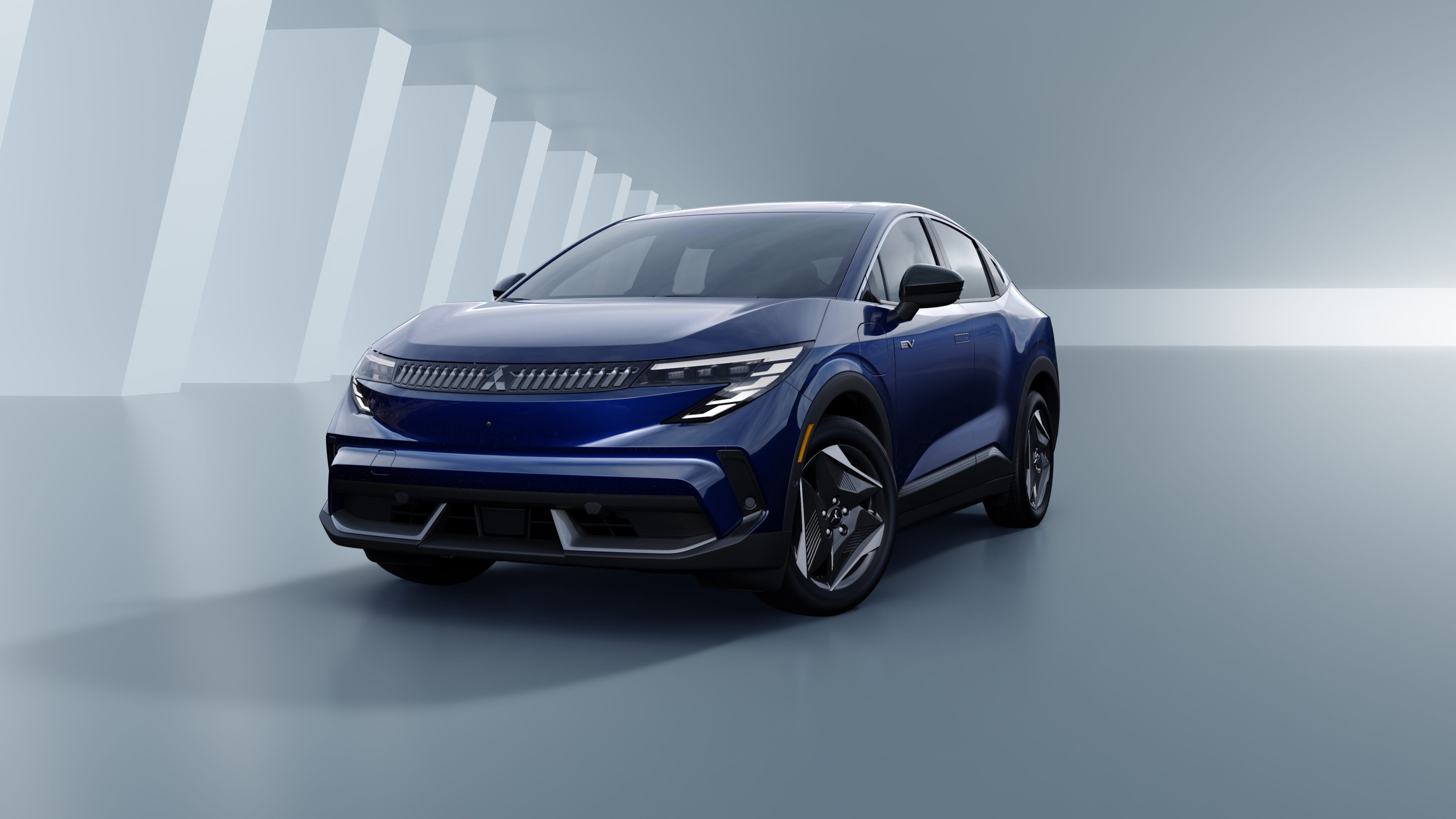
The Mitsubishi Eclipse Is Back — This Time as an Electric SUV
Few names in automotive history carry as much emotional weight among enthusiasts as the Mitsubishi Eclipse. The sleek, turbocharged sports coupe that dominated the 1990s and early 2000s left an indelible mark on an entire generation of car lovers, cementing its legacy through street racing culture, video games, and even major Hollywood films. Now, after years of dormancy and one controversial revival, Mitsubishi is bringing the Eclipse name back once more — this time as a subcompact electric SUV built on the Nissan Leaf platform.
It's a move that will undoubtedly spark debate among purists and practical-minded EV shoppers alike. But before passing judgment, it's worth understanding exactly what Mitsubishi is doing, why it matters, and what it could mean for the future of both the brand and the broader electric vehicle market.
A Name With a Complicated Recent History
This isn't the first time Mitsubishi has leaned on the Eclipse badge to generate buzz in the SUV segment. In 2018, the company introduced the Eclipse Cross, a compact crossover that borrowed the legendary sports car's name but bore virtually no mechanical or stylistic resemblance to it. The decision was met with mixed reactions — some saw it as clever brand leveraging, while others viewed it as an outright disrespect to the original Eclipse's legacy.
Despite the criticism, the Eclipse Cross proved to be a commercial success in several markets, helping Mitsubishi maintain a foothold in a competitive crossover segment. That success appears to have given the Japanese automaker the confidence to extend the Eclipse name even further into new territory — this time into the rapidly growing world of electric vehicles.
What We Know About the New Eclipse Electric SUV
The new Mitsubishi Eclipse is set to be a subcompact electric SUV riding on the same platform underpinning the Nissan Leaf. This connection is hardly surprising given the deep alliance between Mitsubishi, Nissan, and Renault. The three manufacturers have been sharing platforms, powertrains, and technology across their lineups for years, and the new Eclipse EV is a direct product of that collaborative strategy.
By using the Nissan Leaf's proven electric platform, Mitsubishi can significantly reduce development costs while delivering a vehicle with an already well-validated battery and drivetrain system. The Leaf's platform brings with it a level of engineering maturity that a standalone EV development program simply couldn't replicate as quickly or affordably.
Key Attributes Expected From the New Model
- Subcompact SUV proportions, making it ideal for urban and suburban drivers
- Electric powertrain derived from the Nissan Leaf, offering zero-emission driving
- Competitive range figures suited to everyday commuting and weekend travel
- Mitsubishi's signature interior and exterior styling to differentiate it from its Nissan counterpart
- Positioning as an accessible, affordable entry point into Mitsubishi's EV lineup
Why This Strategy Makes Sense for Mitsubishi
Mitsubishi has always had an interesting relationship with electrification. The brand was actually ahead of its time with the i-MiEV, one of the earliest mass-market electric vehicles ever produced, launched back in 2009. More recently, the Outlander PHEV has been one of the world's best-selling plug-in hybrid SUVs for years, particularly in markets like Europe, Australia, and Japan.
Building a new subcompact electric SUV on a proven, alliance-developed platform is a logical next step for a company that wants to expand its EV credentials without taking on the enormous financial risk of an entirely bespoke development program. For a relatively small automaker like Mitsubishi, resource efficiency isn't just smart — it's essential.
Furthermore, the subcompact SUV segment is one of the fastest-growing categories in the global automotive market. Consumers increasingly want vehicles that are easy to park, fuel-efficient (or in this case, emissions-free), and affordable to own. An Eclipse-badged EV squarely in that space could capture buyers who are drawn in by nostalgic name recognition but stay for the practical, modern packaging.
The Enthusiast Dilemma: Legacy vs. Evolution
There will always be fans who feel a sense of loss when an iconic sports car nameplate gets reassigned to an SUV or crossover. The original Eclipse — particularly the turbocharged GST and GSX variants — was a genuine performance car, capable of thrilling driving dynamics and serious straight-line speed. Attaching that name to a people-mover, however practical, feels jarring to those who grew up with posters of the original on their bedroom walls.
However, the automotive industry has undergone a fundamental transformation. Consumer demand has shifted decisively toward SUVs and crossovers, and electrification is rapidly becoming the new standard rather than an exception. Brands that cling exclusively to their heritage risk irrelevance, while those that adapt — even imperfectly — at least stay in the conversation.
Mitsubishi seems fully aware of this tension. By choosing a name with genuine cultural currency rather than inventing something new, the company is betting that emotional recognition will help the new Eclipse EV cut through the noise in an increasingly crowded electric vehicle marketplace.
The Bigger Picture: Mitsubishi's Electric Future
The new Eclipse EV is more than just a single product decision — it signals Mitsubishi's broader intention to build a credible, multi-model electric vehicle lineup leveraging the full strength of the Renault-Nissan-Mitsubishi Alliance. As Nissan accelerates its own EV push with next-generation Leaf successors and the Ariya crossover, Mitsubishi is well-positioned to share those technological advances and bring them to market under its own distinct brand identity.
Whether the Eclipse name ultimately helps or hurts the new model's reception remains to be seen. What's clear is that Mitsubishi is committed to staying relevant in a rapidly changing industry, and reviving one of its most beloved nameplates in an electric form is a bold statement of that commitment. For better or worse, the Eclipse is back — and this time, it's running on electrons.